

Risk Management · 2025
In this section4 topics
Risk Management Policy & Plan
Sub Introduction
Business operations and performance of the Group may not meet the goals from various factors specified in this document. However, these factors may not be all the existing risk factors but they are the key risk factors that the Group has assessed according to the current situation and information, so there may be other risk factors that affect performance or share price of the Group in the future.
Policy & Plan Description
Policy and Risk Management Framework
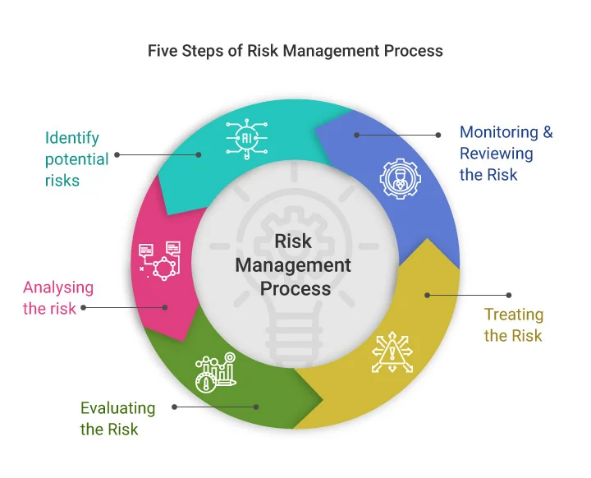
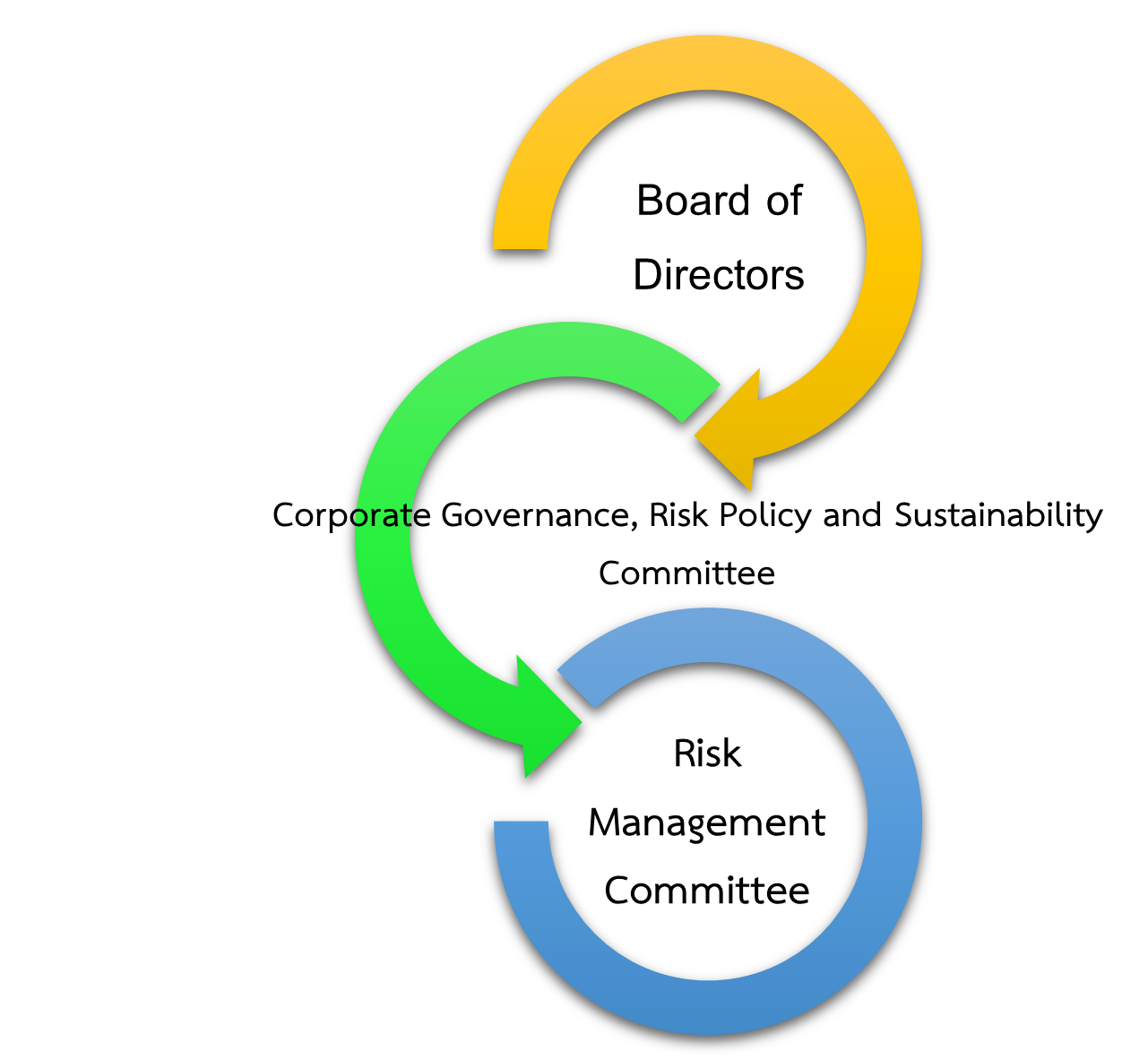
The Group has set a risk management policy that all executives and employees must comply with and also cultivated risk management as a corporate culture. The Chief Executive Officer (CEO) is the chairman of the risk management working team and supervises operations in risk management of the Group. Furthermore, Chief Operating Officer (Mr. Jesada Tanrattanakul) serves as the head of enterprise risk management. The quarterly risk management reports are presented to the Corporate Governance, Risk Policy and Sustainability Committee, the Audit Committee and the Board of Directors of the Company to be acknowledged in order to closely manage and monitor the risks and ensure that they are at an acceptable level. The policy requires that it must be reviewed annually to be consistent with business practices.
In addition, the Group has assessed risks and obstacles that may affect operations along with the adequacy of the existing internal control systems to find the solutions to improve operation for more efficient performance. The Company appointed Kanyadit Advisory Services Company Limited (KAS) to be an internal auditor and responsible for evaluating internal systems and reviewing the organization’s internal control and risk management frameworks. In this regard, Ms. Sriprae Thanathitiphan, Chief Financial Officer, acts as the primary liaison with KAS. The scope covers management and administration of various tasks in the Group and also including assigning and monitoring the management responsible in each department to implement the operational improvement guideline as well as the people involved to adhere it as a practical guideline for more efficient performance.
Risk Management Structure
The Group has a systematic and integrated risk management along with establishing strategies and business plans to ensure continuous risk management throughout the organization efficiently and effectively. Therefore, the risk management structure has been established as follows:
The Group’s activities that promote the development of a risk culture throughout the organization include:
Promoting open communication and transparency about potential risks and their impacts.
Providing training to help employees understand and effectively manage risks.
Integrating risk management into performance evaluations and goal-setting processes.
Establishing clear policies and procedures for reporting and managing risks.
Regularly reviewing and improving risk management strategies to align with changes in the business environment.
Business Continuity Management
Business Continuity Management (BCM) is essential for organizations to effectively respond and operate in crisis or emergency situations that could interrupt continuous operations. Without a preparedness process in place, these interruptions could impact the economy, finances, lives, and property both directly and indirectly. Therefore, BCM is crucial for managing unexpected emergencies, ensuring that critical operational processes can continue and return to normal operations promptly. The Group has thus established policies, measures, and management procedures for a Business Continuity Plan (BCP) to prepare personnel for potential crises, enabling effective response to various potential issues and ensuring the company’s ability to maintain operations. The BCM process includes:
Defining the scope of continuous business operations
Evaluating operations and incidents for the BCP formulation
Conducting a business impact analysis
Establishing continuous business strategies
Assigning responsibilities and allocating resources
Developing a recovery action plan
Testing systems/services
Restoring the primary system
Report on the performance
Updating the continuity plan
The Group is a leading information technology provider, driving innovation and delivering comprehensive end-to-end IT solutions. Our core business encompasses consulting, design, development, and system integration, all aimed at enhancing the operational efficiency of the private sector, state enterprises, and government agencies. This enables them to respond swiftly to the rapidly changing digital landscape. The Group serves leading organizations across key industries, including banking and finance, telecommunications, energy, manufacturing, and the public sector. By leveraging cutting-edge technology to boost business capabilities, we offer specialized expertise in IT infrastructure, networking, cybersecurity, and data management—ensuring operations are efficient, secure, and sustainable. As people are the heart of the Group, we prioritize continuous human capital development. We believe that advanced technology is driven by talented individuals; therefore, we are committed to fostering a learning environment and a culture of innovation. This empowers our employees to develop solutions that enhance quality of life and sharpen our clients' competitive edge. With a forward-looking vision, the Group is not only a technology leader but also a key catalyst in developing Thailand’s digital infrastructure. We are dedicated to driving positive long-term transformation for both the business sector and society.
Strengthening Enterprise Risk Culture
The Group is committed to fostering an effective risk culture across the organization, anchored in good corporate governance and ethical business standards. We integrate Risk Management, Internal Control, and Compliance (RIC) into our core operations, ensuring employees at all levels develop a deep understanding of regulatory requirements through consistent internal communication. By embedding risk management into our Core Values, we cultivate a proactive mindset and an environment of accountability. We prioritize strategic resource allocation to continuously enhance our risk management efficiency.
In 2025, the Group conducted comprehensive risk management training for all executives and employees, complemented by formal assessments to ensure the effectiveness of the program and the continuous development of our risk-aware culture.
Policy Document Link
https://investor.bluebik.com/storage/content/corporate-information/corporate-governance/corporate-policies/bluebik-risk-management-policy-th-02.pdf
Risk Factors — Overview
Risk Factors — Introduction
The Group conducts a comprehensive analysis of both internal and external environments, assessing key economic, social, political, technological, industrial, and competitive factors to identify and manage enterprise-level risks. For 2025 the Corporate Governance, Risk Policy and Sustainability Committee has prioritized a risk assessment approach aligned with Environmental, Social, and Governance (ESG) principles, focusing on both ongoing and emerging risks. The Group classifies its risk management framework into 14 key categories:
Risks to the Company's Business Operations
Risk Register
| Risk Name | Risk Characteristics | Consequences | Management Measures | Related Risk Factors |
|---|---|---|---|---|
| Risk from the effects of economic situation and high competition | The economic slowdown as well as more intense negative factors including geographic risk, international conflicts, fluctuations in exchange rate, interest rates and inflation together with emerging risk factors and impacts make enterprises have delayed the investment spending budget, and this may affect the operating results of the Group. In addition, the Group has provided services to customers by projects. The period of each project depends on the nature of the project and the scope of work. During the process or work, especially for long-term projects, there might be changing factors or unexpected events that would directly or indirectly affect the project implementation. However, the Group is well aware of the risks that may occur, therefore, the Group has focused on maintaining the standards and quality of services in order to keep the existing customer base. Also, the Group has developed new standards for services and offered new ready-to-use innovations so that the Group can find new customers as well as be able to respond to external factors or all changing economic conditions and maintain long-term income base with sustainable future growth. | Moreover, the projects related to IT system development tend to continuously increase. As a result, the number of IT consultants increases overtime to meet with the growing demand. Moreover, IT staffs in large organizations tend to turn themselves into entrepreneurs when they have sufficient expertise and experiences. In addition, more sophisticated IT projects become main goal of multinational consulting firms to participate in such project development consulting services. Therefore, there is a risk of more competition from increasing number of competitors. This may affect performance of the Group. | The Group still believes that, at present, both local and global competitors with high potential to provide comprehensive strategy and IT consulting services that have the same target customer group as the Group are only a few. The main customers of the Group are the customers that develop medium to large projects and focus on the quality of work also experiences of consultants and expertise in technology of the working team. The Group is one of the leaders in well-known IT consultancy, with a management team including manager level and above positions that have knowledges and abilities to deliver works to customers with international standards and have a good relationship with customers. In additional, the Group has personnel who are expertise in providing strategy and IT consulting services under the effective human resource management plan and an operational system that emphasizes the quality control of work in every step, the Group has potential and competitive strength in providing services to customers continuously. In addition, the Group is well aware of the importance of building a network of both local and global business alliances that can strengthen experience and human resource and enhance competitiveness of the Group in the proposal for various projects. The Group also charges lower consulting service fees than multinational consulting firms. Furthermore, the Group has experiences in continuously providing services to key customers in important industries such as financial institution group, insurance group, IT group and etc., which indicates the trust from the customers for consulting services from the Group. As a result, the Group has more competitive advantages in providing services to such organizations. | 1714 · Description: Competition risk · Info category: STRATEGIC_RISK · 1715 · Description: Economic risk · Info category: STRATEGIC_RISK |
| Risk from depending on major customers | In 2018-2020, the Group has had a service agreement with a major customer that contributed more than 30 percent of revenues from services in each year. The largest customer in 2023 and 2024 contributed 21 percent and 19.36 percent of the total revenue respectively. While in 2025, the largest customer contributed 10.52 percent of the total revenue. | The Group has been able to gain the new customers and expand its customer base with more variety in terms of the business category. The risk of relying on the major customers of the Group is reduced continuously. | The Group has a policy to set target customers to major customers, existing major customers or new major customers, to be main revenues that account for approximately not more than 50 percent of revenue from sales and services in each year, so that the Group can develop a working plan and manage resource efficiently. The Group has a plan to expand the customer base to major customers in important industries such as financial institutions, insurance group, retail group, IT group and etc. The Group has a department that is promptly responsible for analyzing and planning to accept works or bid for new projects and regularly reports to management. So, the Group expects that revenues from new customers will continuously increase. In addition, such major customers which the Group provide services are one of the leading financial institutions, one of the leaders in insurance group and leading in retail group in Thailand that have plans to continuously invest in IT, so the Group believes that the Group will continue to receive work from such major customers in the future. Also, the Group does public relations through various channel, including meeting with reporters, to increase brand awareness as well as regularly assesses customer satisfaction. Therefore, the Group believes that this risk will be well managed and is confident that such the risk will not negatively affect operation of the Group. | 729 · Description: Behavior or needs of customers / consumers · Info category: STRATEGIC_RISK · 734 · Description: Reliance on large customers or few customers · Info category: STRATEGIC_RISK |
| Risk from revenue uncertainty | The Group normally provides services to customers by projects, usually with the period 3 months to 3 years depend on the scope of work of each project. | So, there may be a risk from revenue uncertainty after the project completed if the Group cannot find new customers or the existing customers do not have continual hiring plan, and if the customers delay or cancel the agreed works. This may have negative effects on business, financial position and performance of the Group. | The Group has a plan to prevent such the risk by maintaining the standard and quality of services to keep existing customer base that will consider to continue hiring the Group in the future. In addition, the Group tries to expand customer base to new customers in various industries to reduce a risk from the downward cycle in each industry. The Group also focuses on service improvement to increase recurring income such as outsource as a service and development of technology innovation product. The Group has a plan to expand business into new opportunities or investments that create sustainable growth such as investing in joint ventures with long-term business opportunities and etc. In addition, as of the end of 2025, the contract assets of the Group amounted to Baht 838.41 million, indicating that, currently, the Group still has high project on hand waiting for revenue recognition and reduce such the risk. With the quality of services that can comprehensively respond to customers, the Group has believed that the entrepreneurs will consider the Group as an important option if they want to use services. And with the direction and trend of changing business that increasingly bring in technology, therefore, service business of the Group still has an opportunity for good growth as well. | 737 · Other name: Risk from revenue uncertainty · Description: Other · Info category: STRATEGIC_RISK |
| Investment risk in subsidiaries, associates and joint ventures | The Group has expanded its business through investments in subsidiaries, associates and joint ventures. | However, there are risks in investments if the operating results of subsidiaries, associates, and joint ventures do not meet the targets, in terms of both revenues and profits. | The Group is well aware of the risks that may occur, therefore, according to the investment policy, the investment must be in the companies with the same business objectives as the main business of the Company or in the businesses with similar characteristics. This also includes the businesses that support the main businesses of the Group, which will result in increases in business performance or profits of the Group as well as the businesses that have synergies with the Group by supporting the main business operations of the Group to be more comprehensive in order to increase the competitiveness of the Group. In addition, there are both direct and indirect measures and mechanisms, so that the Group can closely control and supervise the management of subsidiaries, associates and joint ventures. Also, it has monitored those subsidiaries, associates, and joint ventures to ensure that they operate according to various measures and mechanisms in order to comply with the criteria regarding supervision of the operations of subsidiaries, associates, and joint ventures. This is to protect the interests of the Group's investments continuously and sustainably as well as to create added value and confidence for the Company's stakeholders. | 1716 · Description: New business risk · Info category: STRATEGIC_RISK |
| Financial liquidity risk | Financial liquidity is important for a consulting business to have sufficient working capital because the main costs are employee expenses which are regularly recurring expenses that cannot be overdue or postponed. While main revenues of the Group are revenues from services under agreements and will be able to charge the service fee only when the works are completed under terms and conditions specified in the agreements. However, the delays due to customers such as very detailed and complicated consideration and approval process is a main factor that make service fee collection process does not go as planned. In such case, the Group has to bear the costs of various expenses and may cause cash flows mismatch and directly affect liquidity of the Group. And there may be a risk that the Group will have insufficient working capital to operate business. | For liquidity of the Group in the past, in 2023 - 2025, liquidity ratios of the Group amounted to 3.82 times, 3.64 times and 4.13 times respectively. And in 2023 - 2025 cash flows from operating activities of the Group amounted to Baht 48.27 million, Baht 305.19 million and Baht 237.71 million respectively. This indicated that the Group had high liquidity and cash flows. Moreover, in the past, the Group used short-term loans from financial institutions to manage liquidity without a default on any debt repayment because the amount of short-term loans from financial institutions of the Group in each year was low. | Still, the Group is well aware of such the risk, so the Group has found the way to prevent it by analyzing and evaluating the customers before bidding or accepting the works. After winning the bid or accepting the work, the Group will strictly comply the service agreements to ensure that the Group will deliver quality works on timely basis to the customers and reduce disputes about the payment of installments or fees. In addition, the Group also make an annual budget to target revenues and projects that the Group plans to submit the bid, so the executives will use the information to analyze and decide to accept or bid for the new project to be in line with the existing projects on hand and create continuity of revenues of the Group. The Group also has a monthly cash flow forecast report and analysis of the risk of outstanding debt from customers in order to continuously analyze liquidity. In addition, the Group also targets to bid on variety of works that will generate cash flow to the Group in all period of time. Therefore, the Group believes that we will be able to manage such the risk very well and is confident that the risk will not affect the operation of the Group. | 761 · Description: Insufficient sources of funding · Info category: FINANCIAL_RISK · 1724 · Description: Liquidity risk · Info category: FINANCIAL_RISK |
| Risk from project management | The Group provides business strategy and information technology consulting services for customers by projects. | There might be risks that the works are not completed in the specified period or the works might not be qualified as specified resulting in project delays. This might cause the Company cannot recognize the revenues from services as planned because the projects delay or the customers do not pay the services fees until they receive services according to specified standards or conditions in the contracts. This may affect reputation as well as liquidity management and operating results of the Group. | The Group has measures to prevent such risks by preparing project plans, regularly monitoring and evaluating project progress together with coordinating with customers, so that the Group could identify the problems and mitigate the risks that might occur. If there are obstacles in any projects and the works might not be delivered as planned, the Group will consider and review the plan to find solutions. | 746 · Description: Delays in the development of future projects · Info category: OPERATIONAL_RISK |
| Risk from human resources management | The main business of the Group is to provide services in business strategy and IT consultancy. This business focuses on providing services by using knowledge, experiences, and expertises in various fields such as business administration, IT, finance and etc. The competitiveness of the Group depends on the selection of qualified and suitable employees to work with the Group thus key resource of the Group is human resource, especially, employees with expertise in IT related to Digital transformation, which are in specific group with limited availability and high competition. Therefore, the Group must have efficient management and a clear and concrete policy in both short-term and long-term, including the policy to retain employees to work with the Company in long term. | Lack of skilled employees at any point of time may cause the Company to fail to meet the contractual obligation with the customers or cannot deliver quality work that meet the customer’s requirements. So, lack of such specialized employees may negatively affect business, financial position, and performance of the Group. | The Group is well aware of the importance of specialized employees and the risk from shortage of such employees that may affect operation and competitiveness, so the Group has reviewed the organizational structure and planned for adequate and appropriate manpower rate by developing selecting and recruiting strategy to find quality employees to work with the Group on timely manner in according to the growth direction of the Group. The main channels for recruiting personnel are 1) Recruitment announcement via offline and online channels of the Group 2) Human resource recruiting companies 3) Knowledge sharing activities with leading universities in the country 4) Referral from employees within the Group and etc. Together, the Group also publicizes the Group brand (Employer Branding) via social media as a channel to communicate the image and culture of the organization. This will help create advantages in human resource recruitment process for the Group in various aspects including attraction, recruitment, and retention. In addition, the Group also focuses on knowledge development of personnel on regular basis by preparing plans for development and training of personnel in various levels and departments to systematically support potential of the employees. There are training in both business and IT theory, practicing to enhance skills in problem solving and service providing to customers, creating sense of attachment and work environment, building culture of teamwork, building good relationship between employees at all level in the Group, encouraging participation in brainstorming and problem solving as well as setting appropriated remunerations in term of money and welfare to employees. Also, the Group has developed an employee retention strategy by analyzing employee satisfaction and employee at risk of leaving organization to find management guidelines that appropriate for each individual. There is an assessment plan for a group of employees with outstanding abilities and performance to have the opportunity to grow in the line of work. The Group also designs appropriated developing method for those who have assessments that are adequately expected or below-expected. The Group has launched Employee Joint Investment Program (EJIP) to employees. This will create work motivation to employees and enable to Group to retain talented employees and have sustainable business growth. In the past, the Group has continued to grow. The number of employees increased from 174 in 2021 to 299 in 2022, 848 in 2023, 888 in 2024 and 930 in 2025. | 739 · Description: Shortage or reliance on skilled workers · Info category: OPERATIONAL_RISK |
| Risk from dependency on directors and Executives | The Group highly depends on key executives in business operation especially, Mr. Pochara Arayakarnkul, who is the Chief Executive Officer (CEO), and Mr. Pakorn Jiemskultip, who is the Chief Technology Officer (CTO), and both of them are the founders and major shareholders of the Group. This is also including Mr. Phiphat Prapapanpong, a key executive. The three executives have sophisicated knowledge and expertise in developing comprehensive business and IT strategy. They also control quality of work to meet international standards and customers’ requirements, which is the key factor for business expansion and growth of the Group. | These executives also determine the business direction of the Group. Therefore, the key success factor in the future is the ability of the Group to maintain such key executives to be with the Group in the long term. Consequently, the loss of such executives without suitable successors may cause negative effects to management and performance of the Group. | The Group is well aware of the effect of dependence on the key executives on business operation. Thus, to mitigate the risk of relying too much on one person, the Group has reorganized the organizational structure to be decentralized and do not rely too much on the decisions of the three key executives. There are the Board of Directors, the Audit Committee, the Nomination and Remuneration Committee, the Corporate Governance, Risk Policy and Sustainability Committee, the Executive Directors, and management team to take part in administration and making key decisions according to the set authority in order to mitigate risk of relying too much on the three key executives. In addition, the Group has recruited C-leval executives as well as executives of various departments to enhance the efficiency of management and administration. The Group is one of the leaders in business strategy and IT consulting in Thailand. The Group can accept variety of works related to business strategy and IT. This is an advantage in creating new challenges and knowledge for executives to employees who have middle to low level of expertise. Therefore, the Group believes that it will be able to maintain the three key executives. In addition, the Group has a policy to provide welfare benefits and appropriated compensations, and the three key executives are the co-founders and have worked with the Group for a long time, therefore they have bond and are ready to support the Group to sustainably growth in the future. In addition, the Group also has a succession plan to ensure the continuity of the key positions by preparing the middle-level management to be ready and able to take the position of senior executives in the future. Also there are rules and appropriated and transparent procedures for recruiting employees responsible for important management position to ensure that the Group has executives with qualifications, skills, experiences and professional abilities by the Nomination and Remuneration Committee and/or the appointed Committee in recruiting/selecting and planning for succession. When the senior executive position is vacant or the person in such position is unable to perform the duty, there is a management system for the peer executive or junior executive to act in the position until there is a recruitment and selection of a qualified person in according to the criteria specified by the Group. Importantly, such a person must have visions, knowledges, abilities, experiences and appropriateness with the culture of the organization. The Nomination and Remuneration Committee will consider the nomination and present to the Board of Directors for consideration and approval of the appointment of the suitable person for replacement of the position. | 738 · Description: Reliance on employees in key positions · Info category: OPERATIONAL_RISK |
| Risk of information system security | Information technology systems are critical to the Group’s business operations. There may be risks related to the security of information systems arising from external threats such as cyberattacks, system intrusions through vulnerabilities, and data leakage from external service providers or partners, as well as internal threats such as excessive access privileges, negligent actions, and fraudulent or intentional data leakage. | In case important information related to operations that are used in providing customer services is lost or leaked to outsiders or competitors, there will be negative impacts on the business operations of the Group. | The Group has established procedures in the information security policy and prevented loss or leakage by specifying data access rights, limiting the use of information and etc. These have been communicated with general employees, and, during the orientation, there is training to ensure that the new employees are well aware of such policy. Also, there are plans to deal with emergency situations, information backup and recovery system and computer virus protection systems, etc. | 744 · Description: Information security and cyber-attack · Info category: OPERATIONAL_RISK |
| Risk from changes in technologies | The Group operates consulting business related to IT, which is rapidly developed and changed. | If the Group is unable to keep up with the changes of industry or develop employees to be able to use such technology in a timely manner, it may result in insufficient quality of work or more time to process than necessary. This may negatively affect business, financial position and performance of the Group. | The Group has guidelines to mitigate the risk from such technology changes by closely following information, news, and changes in industries related to business and adapting to keep up with such the technology changes as well as offering products and services to meet with the demand of customers and market. This can create business opportunities and prevent disadvantages from competitors. In addition, the Group has a policy to support the staffs of the Group to learn and use new technology on regular basis to keep up the employees with the changes of technology. | 732 · Description: Changes in technologies · Info category: STRATEGIC_RISK |
| Compliance Risk | Compliance risk, particularly in relation to personal data protection laws such as the PDPA, refers to the risk that the Group may collect, use, disclose, transfer, or process personal data of clients, partners, employees, or related parties in a manner that does not comply with applicable laws and relevant guidelines. | If the Company fails to comply with PDPA requirements properly, it may face legal and regulatory consequences, such as investigations or enforcement actions by relevant authorities, claims for damages from data subjects, or contractual disputes with clients or partners. This is particularly relevant in cases involving data breaches or the use of personal data beyond the stated purposes. Such situations may require the Company to allocate significant resources to investigate incidents, implement corrective actions, and establish remediation measures. From a business perspective, these issues may affect the confidence and reputation of the Group, impacting on its ability to retain existing clients and acquire new ones, including increased project execution costs (such as revising data architecture, adjusting consent and notice processes, performing data mapping, and strengthening security measures), and could lead to delays in project delivery or failure to meet acceptance conditions required by certain clients with stringent data requirements | The Group has established a personal data governance framework to ensure systematic compliance with PDPA by issuing relevant policies and procedures (such as data classification, data retention and destruction, handling of data subject rights requests, and guidelines for data transfer), defining the roles and responsibilities of relevant units, maintaining records of processing activities (RoPA), conducting risk and impact assessments for personal data processing activities that involve higher risk as appropriate, and setting standard contractual terms and agreements with data processors and business partners (such as scope of processing, security measures, and incident notification requirements). In terms of operational controls and implementation, the Group has strengthened data security measures through both technical and procedural approaches, such as enforcing access control based on the principle of necessity, applying encryption, logging and monitoring data access, and regularly testing and reviewing system configurations. The Group has also established incident management and breach response plans, along with ongoing training and awareness programs for employees, reduce the likelihood of incidents and mitigate their impact effectively in a manner that can be properly monitored and audited. | 756 · Description: Change in laws and regulations · Info category: COMPLIANCE_RISK · 757 · Description: Laws and regulations is not favorable for doing business · Info category: COMPLIANCE_RISK · 759 · Description: Corporate Governance · Info category: COMPLIANCE_RISK |
| Corruption Risk | This refers to the risk that personnel or individuals associated with the Group may intentionally commit fraudulent or corrupt acts for the benefit of themselves or others, resulting in damage to the organization in the form of loss of assets, funds, data, or credibility, including asset or fund misappropriation, corruption in procurement and contracting processes, or weaknesses in internal controls and governance. | Such risks may result in financial and asset losses, operational impacts such as disruptions to work processes and reduced overall efficiency, as well as reputational damage and loss of organizational trust. | The Company prioritizes robust corporate governance and internal control systems, underpinned by a strict Anti-Corruption Policy. To mitigate fraud risks, we implement rigorous monitoring of key operational processes. This includes engaging independent internal auditors to perform risk assessments and randomized audits, ensuring operational transparency and effective fraud prevention. Furthermore, we provide a dedicated Whistleblowing Channel for stakeholders to report grievances or suspicious activities directly to the Audit Committee. All reports are handled through a systematic, transparent, and verifiable investigation process. This ensures fairness and fosters trust among all stakeholders in our commitment to integrity and accountability. | 754 · Description: Corruption · Info category: OPERATIONAL_RISK |
| Climate Change | Climate change risk may affect the Group’s operations and business continuity and can be broadly categorized into two main types:
However, the Group’s business is primarily service-based and uses physical resources and production processes that directly generate pollution only to a limited extent. Therefore, such risks are less likely to occur and are unlikely to have a significant direct impact on the Group’s operating results compared with businesses that rely heavily on raw materials, manufacturing, or logistics. The more relevant risks are likely to relate to service continuity and requirements imposed by clients or partners. | If climate change–related events occur, the potential impacts on the Group are generally within a manageable scope and are typically indirect. These may include operational and service delivery impacts, such as short-term delays caused by severe weather conditions affecting team travel, access to client premises, or onsite collaboration. There may also be impacts on the availability of systems and workplaces, including temporary disruptions resulting from power outages, network failures, or restricted access to office buildings. Such impacts can often be mitigated through remote working arrangements and the use of cloud-based systems. There may also be implications related to compliance with client requirements and expectations, for example, where certain large enterprise clients introduce additional sustainability-related conditions (such as supplier carbon footprint reporting or green procurement practices), which may increase documentation and reporting requirements but generally do not materially affect the Group’s core business operations. | The Group has established climate change risk management measures that are appropriate for its service-based business, with a primary focus on maintaining service continuity. These measures include preparing and periodically reviewing business continuity plans (BCP) for severe weather events, enabling remote working arrangements and maintaining communication with clients to adjust delivery plans when necessary, utilizing resilient system infrastructure with data backup and system recovery arrangements, and monitoring sustainability requirements from clients and partners to ensure appropriate responses. The Group also periodically reviews the adequacy of these measures to ensure alignment with evolving circumstances and stakeholder expectations, considering that the overall level of climate-related risk for the Group’s business remains limited. | 750 · Description: Climate change and disasters · Info category: OPERATIONAL_RISK |
| Emerging Risk | The increasing adoption of artificial intelligence technologies, particularly Agentic AI, AI automation, and Generative AI models, to support work processes and improve the quality of delivery in consulting and system development projects is rapidly changing the way work is designed, developed, tested, and quality controlled. If the Group does not establish an appropriate governance framework, risks may arise regarding the accuracy and reliability of outputs, such as incorrect information or recommendations produced by AI systems, model bias, and limitations related to traceability and audit trails, as well as transparency in system decision-making. In addition, the use of AI systems that are capable of making decisions or performing tasks on behalf of human operators may create risks if the scope of operation, access rights, and operational controls are not aligned with the criticality of the process and the requirements of clients or regulatory authorities. | This may affect the Group’s ability to deliver work in accordance with agreed terms and project quality standards, such as the need for rework, delays in delivery, or outcomes that do not meet client requirements, particularly in projects that involve high complexity or sensitive data. Such situations may lead to client complaints, revisions to the scope of work, and increased project costs. At the organizational level, these issues may also affect the Group’s reputation and client confidence, as well as increase the risk of contractual liabilities and risks related to data and system security if data is accessed or used beyond what is necessary, if data leakage occurs, or if automated processes are configured inappropriately. | The Group has established an AI governance framework aligned with the nature of its business and the level of risk associated with each activity. This framework includes criteria for evaluating and approving AI use based on specific use cases, guidelines on data protection and privacy, the selection and management of AI providers or models, and the preparation of necessary documentation to support traceability and oversight by clients and other stakeholders. At the project execution level, the Group has defined appropriate control points, such as expert review of significant outputs through a human-in-the-loop approach, model testing and risk assessment prior to deployment, access control based on the principle of least privilege, monitoring of performance and anomalies after deployment, and the establishment of incident response and rollback procedures. These measures are intended to ensure that the use of AI enhances operational efficiency while maintaining quality standards, security, and reliability in project delivery. | 755 · Other name: Application of Agentic AI/AI Automation and Risks in AI Governance & Model Risk · Description: Other · Info category: OPERATIONAL_RISK |
Risks to Securities Holders' Investment
Risk Register
| Risk Name | Risk Characteristics | Consequences | Management Measures | Related Risk Factors |
|---|---|---|---|---|
| Risk involved with limitations on future share subscription by certain investors who are outside of Thailand | The Group may issue new securities by proportionately offering shares or other securities to existing shareholders (Rights Offering) or something similar. The Group has the right to use its discretion to determine the method and the shareholders must comply with such method. | The Group may not offer such the right to the shareholders who are outside Thaniland. Under applicable law, the Group may be prohibited from offering such instruments to ordinary shareholders in some countries unless the relevant procedures have been performed. For examples, the Group cannot offer such rights to an ordinary shareholder who is a U.S. person in the sense of Regulation S under the United States Securities Act of 1933 unless (a) there is a security offering registration statement that is applicable under the United States Securities Act of 1933 or (b) an offering of such rights to shareholders pursuant to an exemption under the United States Securities Act. Compliance with securities law or other regulatory requirements in some countries may cause investors to be unable to exercise their rights to proportionately acquire securities. This may reduce shareholding of such investors. | The Group is not obliged to apply for registration of the Group’s ordinary share in any country in order for foreign investors to exercise their rights to purchase newly issued ordinary shares (Rights Offering) if the Group will offer the ordinary shares in the future. | 768 · Description: Return from investment of securities holder · Info category: HOLDER_RISK |
| Investment risk of securities holders | This refers to the risk that investors may not receive returns as expected, or that the value of securities may decline due to factors affecting the Group’s operating results, financial position, cash flow, and competitiveness, as well as external factors beyond the Group’s control such as economic and capital market conditions, industry volatility, technological changes, regulatory developments, and events that affect investor confidence. In addition, the price of securities may fluctuate due to market trading activity, liquidity factors, and investor perception of available information, which may cause the market price to deviate from underlying fundamentals during certain periods. As a result, investors may experience fluctuations in the value of their investments even if the Group continues to operate in accordance with its plans. | Investors may be affected in the form of a decline in the value of securities or price volatility, which may result in losses when securities are sold during periods of price decline or returns that are lower than expected. Investors may also be affected by changes in trading liquidity, which may prevent them from buying or selling securities at the desired price or time. From the perspective of the Group, volatility in share prices and a decline in investor confidence may affect the Group’s ability to raise capital, increase financing costs, and reduce flexibility in executing strategic initiatives (such as investments, business expansion, or acquisitions), as well as increase pressure on corporate communication and governance practices. | The Group seeks to mitigate investment risks for shareholders through good corporate governance, prudent strategic and financial management, and the implementation of business plans to maintain profitability and stable cash flows. The Group also monitors external factors that may affect its business and adjusts its plans as appropriate to strengthen competitiveness and respond to volatility in the business environment. In addition, the Group places importance on providing accurate, complete, and timely disclosure of information to investors and stakeholders in accordance with relevant requirements, as well as maintaining regular communication with investors to support investment decisions based on sufficient information and to reduce risks arising from information gaps and market confidence. | 769 · Other name: Investment risk of securities holders · Description: Other · Info category: HOLDER_RISK |